


My yoga journey began in 2017. Yoga had come into my life as a way of dealing with an extremely stressful degree I was studying for; very quickly the classes became the highlight of my week and something I couldn’t get enough of. The most I could do in a week was 3 classes, but I knew, even then, that I had stumbled into something magical, something that could really help people (the way it had helped me), and something that I wanted to share with others. So, with only about 6 months’ regular practice under my belt, I signed up for All Yoga training’s 200hr yoga teacher training in Bali.
It was also my first time in Bali so I had no idea what to expect, but I had chosen All Yoga training because of the huge number of positive reviews available online, and because the videos and photos on the website made it look fun, something that I had been desperately lacking for the last few years. Overall, I just got a good gut feeling; everyone looked friendly and outgoing, and I felt like I might just find my tribe there (spoiler alert: I found much more than that!).
At this point I have to make an embarrassing confession.
On day 1 when they were introducing the course and mentioned it was an Ashtanga-vinyasa training, I had no idea what they were talking about. I actually hadn’t realised I had signed up to an Ashtanga training! Luckily for me, it turned out to be an extremely accessible, non-dogmatic approach to Ashtanga, and I ended up finding a style that, to this day, remains one of my favourites (both as a student and teacher).
But I’m getting ahead of myself.
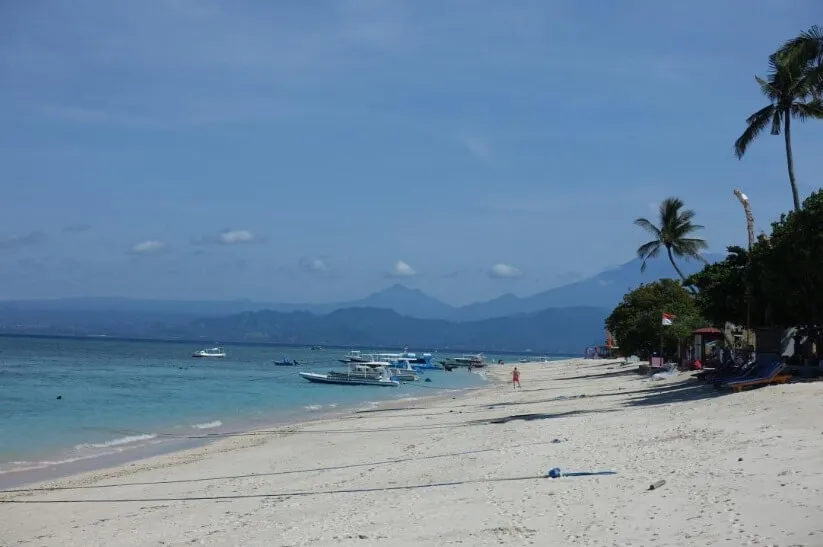
The boat ride over to Nusa Lembongan (where All Yoga’s training is held) from the main island of Bali was an amazing start to the trip – as we arrived to the island we had to jump out and walk in the last few steps on the white sand (with the crew carrying our suitcases over their heads); I felt like I’d arrived on a secluded tropical island, very different to the crazy rush of Bali’s main island. Because I had been one of the first 4 sign-ups, I also received free accommodation as well as the early bird price, so I settled into my homestay and unpacked, not really knowing what to expect but excited for the journey ahead.
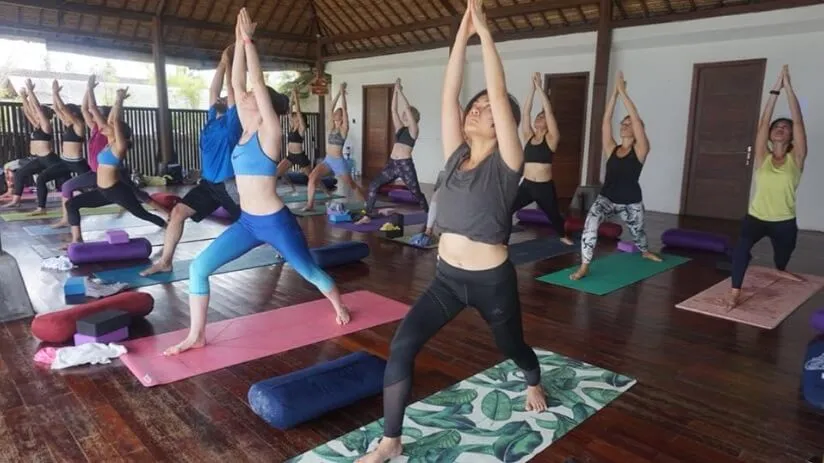
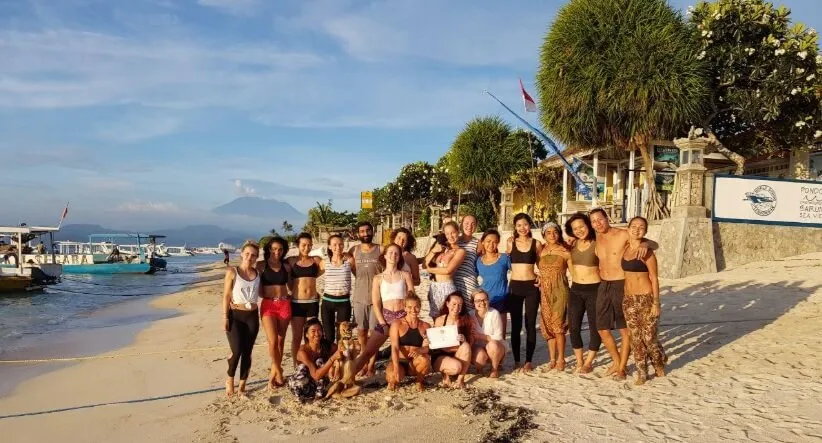
The first day of the training we all met in the shala (5 minutes’ walk from my homestay), which was literally right on the beach and open on two sides so you could directly look out onto the beach and ocean while practicing – the sea breeze was a godsend during the sweaty practices! It was truly a magical place to practice yoga.
Considering that I had unknowingly signed up for one of the most physically intense styles of yoga I could have chosen, I was able to cope with the sheer amount of practice (around 3 hours a day) surprisingly well.
Don’t get me wrong, it was extremely physically demanding, so I would recommend making sure you’re exercising at least twice a week (including cardio) on top of your yoga practice, before starting the programme. And be prepared to change outfits at least once a day (so plan for at least 2 yoga outfits per day) as you will be sweating so much in the heat! (Bringing electrolytes with you can also help you not feel totally exhausted.) Luckily, most homestays will do laundry for you as often as needed, just remember to add that on to your budget.
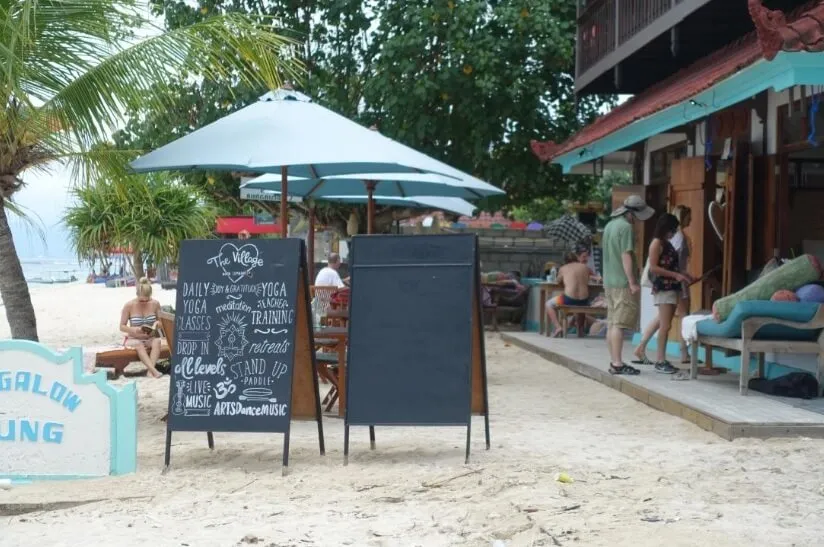
We quickly adapted to the routine: early morning wake up at 6.30am (ready to start at 7.30), starting the day with meditation and pranayama, followed by a full Ashtanga practice. Then a 2 hour break to go get brunch (my favourite meal of the day!) at one of the cute little cafes dotted around (food is not included in the training but this was actually great for me as a vegan, as it meant I could choose one of the many vegan/vegan-friendly spots such as Ginger and Jamu.
Food is also generally cheaper on Nusa Lembongan than the main island, which has become more Western in its pricing). After brunch we had a few hours of lectures (on topics such as philosophy, history of yoga, etc.), then asana lab, where we break down the poses and learn alignment, cues, modification, anatomy, and much more.
After a shorter afternoon break, we then had a final yoga practice (this is where we learned a modified version of the primary series – great for beginners, or students with injuries, etc.) before finishing at 6pm with ‘playtime’, which was an optional time to work on random poses, do a workout (for the ‘gym bunnies’ in the group!) or just hang out with the teachers for a little bit.
This was usually the time when most of us ran straight out of the shala into the ocean, or simply sat on the golden sand, watching the sunset; I often had to pinch myself that this was my life! The rest of the evening was free, so we would then go grab dinner somewhere close by, do some homework together, and then into bed early, to start it all again the next day.
This was the schedule for 6 days and then we would have 1 day off. Some students chose to do sight-seeing activities on the day off (of which there were plenty), or to do something active like a boat trip or surf lesson. But after 6 days of intense practice, it’s also totally fine to just rest! Most of us went for massages on our days off (massages are super cheap in Bali which is amazing) or simply lay on the beach and studied.
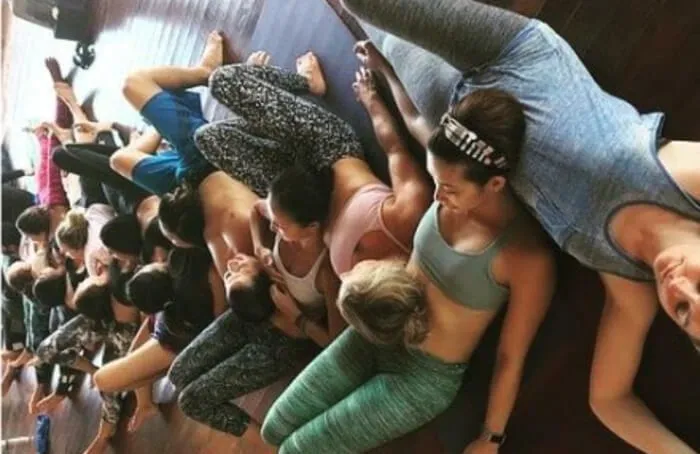
Once a week we also had a fun workshop in the afternoon; Acroyoga was one of the highlights for me! This was a chance to try out a different style of yoga, as well as giving us ideas about the kinds of workshops we could run as yoga teachers in the future (for example, a back-bending or inversions workshop).
By far, one of the things that I found the most difficult during the training, more than the physical practice, was learning the Sanskrit names for all the poses! We all wondered how on earth we were going to learn them all in time for the final exam. But we all practiced together every break we had, and, by the end, everyone was using the Sanskrit names quite comfortably. (And don’t worry – you don’t need to have every name perfectly pronounced to pass!)
For the final exam, the group was split in two, with half of us teaching the modified primary series to one student in the other group while the teachers went round checking and listening, before we swapped roles (it would have taken too long for everyone to teach to the entire class).
This also took a little bit of the stress off, as you’re only teaching one student and can really pay attention to what they’re doing to check they’re following your instruction. While the initial thought of teaching the series and remembering the Sanskrit was super daunting, by the time the exam came around it wasn’t so bad, as we’d had so much practice teaching, right from the start of the training.
Other than packing more yoga clothes, here are some of the things I wish I’d known before starting the course:
- There are lots of food options on the island, including local warungs and more international Western cafes. If you choose to eat at the local warungs just be very mindful that ‘Bali belly’ is common, especially from salads and improperly washed foods. You don’t want to have to take lots of time off the course due to illness, so if your budget allows you might want to eat at the more Western places (as they tend to have better hygiene standards) and take medication such as Imodium and electrolytes with you.
- While it can be really tempting to sunbathe on your day off and during breaks, please use sunscreen! I got badly burnt on the day off which impacted my practice, as it was sore to lie on my back for the next few days. It’s not worth the pain and missing class, so please cover up and be sensible!
- If possible, don’t rush home after the training. Plan to spend the first few days after the training just… resting. You’ll probably want to go exploring or sightseeing, but I really encourage you to just stay put (in the same hotel or place you’re staying) and spend a few days not only recuperating after the physical intensity of the programme, but also mentally processing and integrating everything you just learned. If you’re like me, you’ll likely have a lot of messy notes that need to be organised and written up properly, or maybe things you need to clarify (you’ll have access to your peers and teachers in the WhatsApp group so make the most of this in the early days!). Then you can go and do the touristy stuff, but give yourself the integration time, as you likely won’t get round to it once you’re back home.
Overall, the training far exceeded my expectations. It introduced me to a style of yoga that I had never tried before (and probably would never have thought to try!) and taught me an accessible and non-dogmatic approach to Ashtanga that has kept me injury-free and still in love with the practice after all these years.
I still have new students regularly coming up to me after class saying that they’ve never had an Ashtanga class that was explained so well to them, where they really understood the poses, and where they were given modifications and not just left out or excluded, and I always have to give credit to my All Yoga training for this.
I also discovered a love of teaching that I didn’t know I had, and through teaching yoga I’ve been able to experience some incredible things, such as teaching yoga to hotel guests on a beach in Fiji, not to mention the amazing people from all around the world that I’ve met on yoga teacher trainings. To say the experience was life-changing sounds like a cliché, but for me it was true.
If you feel called to attend a yoga teacher training, then All Yoga Training in Bali will provide you with a solid foundation to become the best teacher you can be.
Here’s the nitty gritty to help finalize your decision:
- School established: 2009
- Program length: 23 days
- Accreditation: Yoga Alliance accredited
- Class size: Max 24 students
- No. of teachers: Usually at least 2 main teachers, plus guest teachers for philosophy and anatomy
- Cost: From $3150 (If you book early enough you could get free accommodation – get in touch with them for more info)
- Course location: Bali or Thailand
Psssst: You can also get an additional $150 off by mentioning this article and that you were referred by me!
All Yoga Training was my entry into yoga and teaching, and, after 1000 hours of further trainings, I can confidently say it was one of the best trainings and introductions I could have hoped for.

Charlotte Watts is a 500 hr trained Senior Yoga Teacher (Yoga Alliance) and an experienced, award-winning Nutritional Therapist and author.