

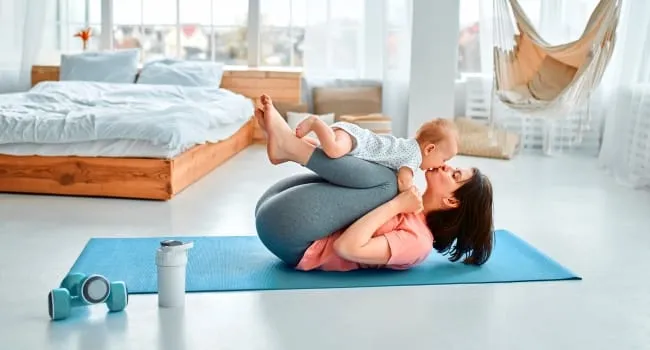
Your whole world revolves around your precious baby and that’s okay. It’s been like this for the past 9 months and will probably continue for the rest of your life. This doesn’t mean that you should neglect your own health and wellbeing because self-care is absolutely essential for you to be your best, for yourself and for your baby. Pregnancy and childbirth are incredibly tough on your body, so recovery takes time and it requires some support in the form of gentle exercise and other self-care practices.
For the first six weeks, you need to be extra cautious with your choice of exercises as you shouldn’t strain your core muscles as this will delay healing from common post pregnancy conditions such as Diastasis recti, in which there is a separation of the abdominal muscles. Relaxin levels also remain elevated for up to 6 months so you’ll need to take it slow and focus primarily on gentle stretches.
Don’t forget to also use support gear such as nipple protectors, cozy socks, support bands, and specially designed postpartum yoga leggings to aid recovery and make your self-care routine more manageable.
Try This Postpartum Yoga Routine to Get Started
1. Child’s Pose
This is perhaps the most commonly used starting pose for yoga sessions, whether for beginners, advanced students, or postpartum. As a gentle recovery pose it’s the perfect way to begin your session, helping to release tension in the lower back, hips, and shoulders – areas that are commonly strained during pregnancy and childbirth. This pose is so relaxing that some practitioners say it even makes them feel drowsy, which is great for you as lowering those stress levels will improve circulation and recovery.
2. Corpse Pose
Another restorative and relaxing pose, the corpse pose is usually used to relax your mind and body at the start or end of a session. It lowers stress levels, heart rate, and blood pressure, increasing mindfulness. For new mothers, it can be extremely helpful to find a moment of stillness amidst the demands of postpartum life. As the pose releases tension, it also prepares your body for the rest of your routine.
One of our favourite yoga props for new moms is a
Flax & Lavender Eye Pillow from Love My Mat.
Their Eye Pillows are handmade in Ontario, Canada and filled with the right amount of flax for gentle acupressure around the eyes & forehead.
The scent of lavender helps relieve headaches, induce sleep, and reduce stress. The added bonus? Eye Pillows will help you nap while your baby naps.
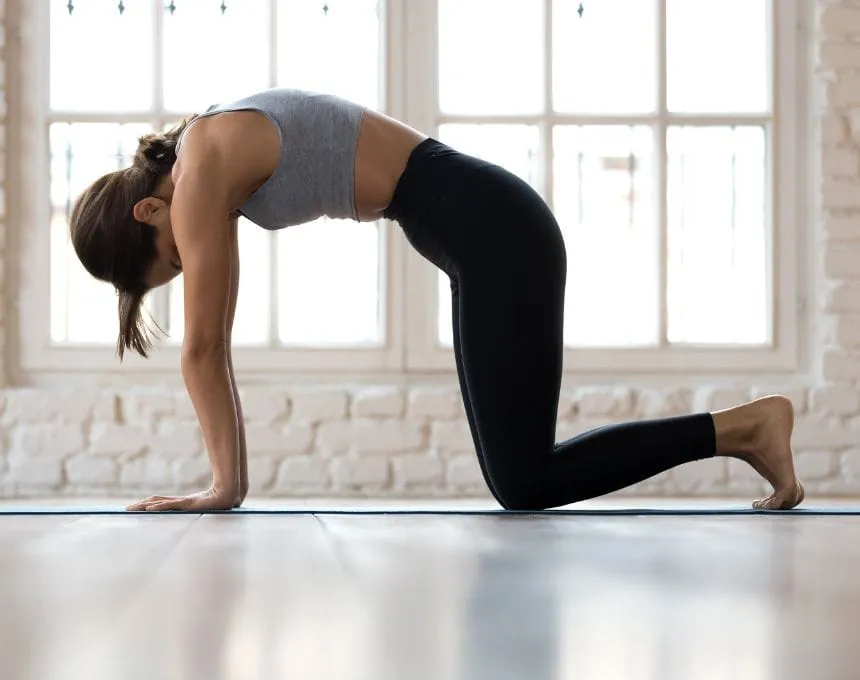
3. Cat Cow Pose
Postural problems are common after childbirth, with many women experiencing severe back pain as a result of carrying and nursing a baby. The cat cow pose is particularly effective at relieving tension in the lower back as the dynamic stretch enhances spinal flexibility and strengthens the core.
4. Camel Pose
The camel pose is another simple pose that gently opens up the chest and shoulders, relieving postural strain from forward-leaning positions that are commonly used during breastfeeding. It also strengthens the back and core without straining any of the muscles.
5. Bridge Pose
Although you need to avoid poses that put any strain on the core, the bridge pose is very similar to Kegel exercise, making it an essential in any postpartum yoga routine. The practice can be used to restore pelvic muscle strength to deal with bladder leakage, as well as strengthen the core muscles, upper back, glutes, and thighs.
6. Sitting Swan Pose
This is a relaxing sitting pose that stretches out the hips, glutes, and lower back, helping to release tension and improve flexibility. This is a good addition to a postpartum yoga routine as these areas tend to tighten during pregnancy and this will help ease discomfort and restore mobility.
7. Mountain Pose
One of the best-known standing poses in yoga, the mountain pose will help to improve posture and balance while grounding and stabilizing your body. This is helpful in any situation as it cultivates stronger body awareness, while also strengthening the legs.
8. Bumble Bee Breath
Breathing exercises are known to be good for stress management and relaxation, but not all yogic breathing exercises are suited for a postpartum routine. Bumble bee breath is a good choice because it does not require you to take deep breaths into your belly, but simply involves mindful breathing and humming like a bee as you exhale. The vibrations from your humming help improve focus and clarity, also providing a deep sense of calm.
If you have had any pregnancy complications or underwent a C-section, make it a point to talk to your doctor before beginning any exercise routine, including yoga poses. It would also help to talk to an experienced pregnancy and postpartum yoga instructor to better understand which poses you should avoid and how other poses can be modified to suit your needs.

Kelly is a passionate writer, enthusiastic yogi and professional sunrise chaser. Kelly has traveled and worked extensively around the world in health resorts, detox centers, and wellness retreats.