

Exploring the Essence: What is an Om and its Significance in Spiritual Practice
‘Om’—a single syllable that resonates with profound spiritual importance. Rooted in Eastern philosophies, ‘Om’ is considered the primordial sound of creation itself, an ancient mantra that connects practitioners to the universe’s cosmic vibration. In this article, explore the multifaceted roles ‘Om’ plays in Hinduism, Buddhism, and Jainism, and delve into the question, “what is an Om?” Discover how its chanting can enrich one’s spiritual and physical wellbeing.
Key Takeaways
- The Om symbol originates from Hindu scripture dating back to the 6th century, representing the original vibration of the universe, and is significant in Hinduism, Buddhism, and Jainism as a cosmic sound that symbolizes the essence of the supreme Absolute and interconnectedness.
- Chanting Om is believed to have psychological and physiological benefits, such as enhancing relaxation, boosting the parasympathetic nervous system, reducing stress, and balancing energy centers, according to scientific research and spiritual practices.
- The integration of Om into yoga and meditation practices deepens spiritual experiences, enhances focus, and promotes tranquility and well-being, while respecting its cultural origins requires mindfulness of its significance and guidance by knowledgeable teachers.
The Essence of Om: Understanding its Meaning and Origin

The Om symbol, with its roots dating back to the 6th century, signifies the start of a text in Hindu scripture, embodying the primordial sound of creation and the original vibration of the universe. Considered the embodiment of the supreme Absolute, consciousness, Ātman, Brahman, or the cosmic world, this sacred syllable serves as an auditory symbol of the divine and forms a fundamental element of soteriological doctrines and practices in Indic traditions. The word “om” holds great significance and power in these spiritual contexts.
Chanting Om connects you with the entire universe and taps into the ultimate reality. It aligns you with the original vibration that birthed all sounds and forms in the universe. The om stands as a powerful testament to the spiritual wisdom that believes in the interconnectedness of all beings and our collective resonance with the supreme power.
Om in Hinduism
In the sacred Vedic scriptures of the ancient Indian religion, Om holds central importance. It’s viewed as the primordial sound of creation, the original vibration that resonates within all of creation. Utilized at the beginning and end of prayers, chants, and meditation, the Om symbolizes the essence of the entire universe, signifying a spiritual symbol of cosmic reality in Hindu cosmology.
Beyond just a sound or syllable, Om in Hinduism serves as a mantra – a sacred invocation that forges a connection between the individual and the absolute state of being. With its multifaceted significance, Om transcends the boundaries of a conventional symbol to become a spiritual beacon, guiding the voyagers on their journey towards self-realization.
Om in Buddhism and Jainism
Om’s spiritual influence extends beyond Hinduism, marking its presence in other ancient Indian religions like Buddhism and Jainism. In the Buddhist teachings of Tibetan sects, Om symbolizes wholeness, perfection, and the infinite. It forms an integral part of many mantras, embodying the external aspects of a sentient being – the body, speech, and mind.
The sacred syllable resonates with equal reverence in Jainism. Central to the most important prayer, the Navakar Mantra, Om serves as an abbreviation of the fivefold salute to the Panca-Paramesthi, symbolically representing the divine qualities and attainments of saints, siddhas, and sages within the Jain tradition. The mantra “om mani padme hum” shares a similar significance in other spiritual practices, emphasizing the power of sacred syllables.
The Symbolism of Om: Decoding its Components
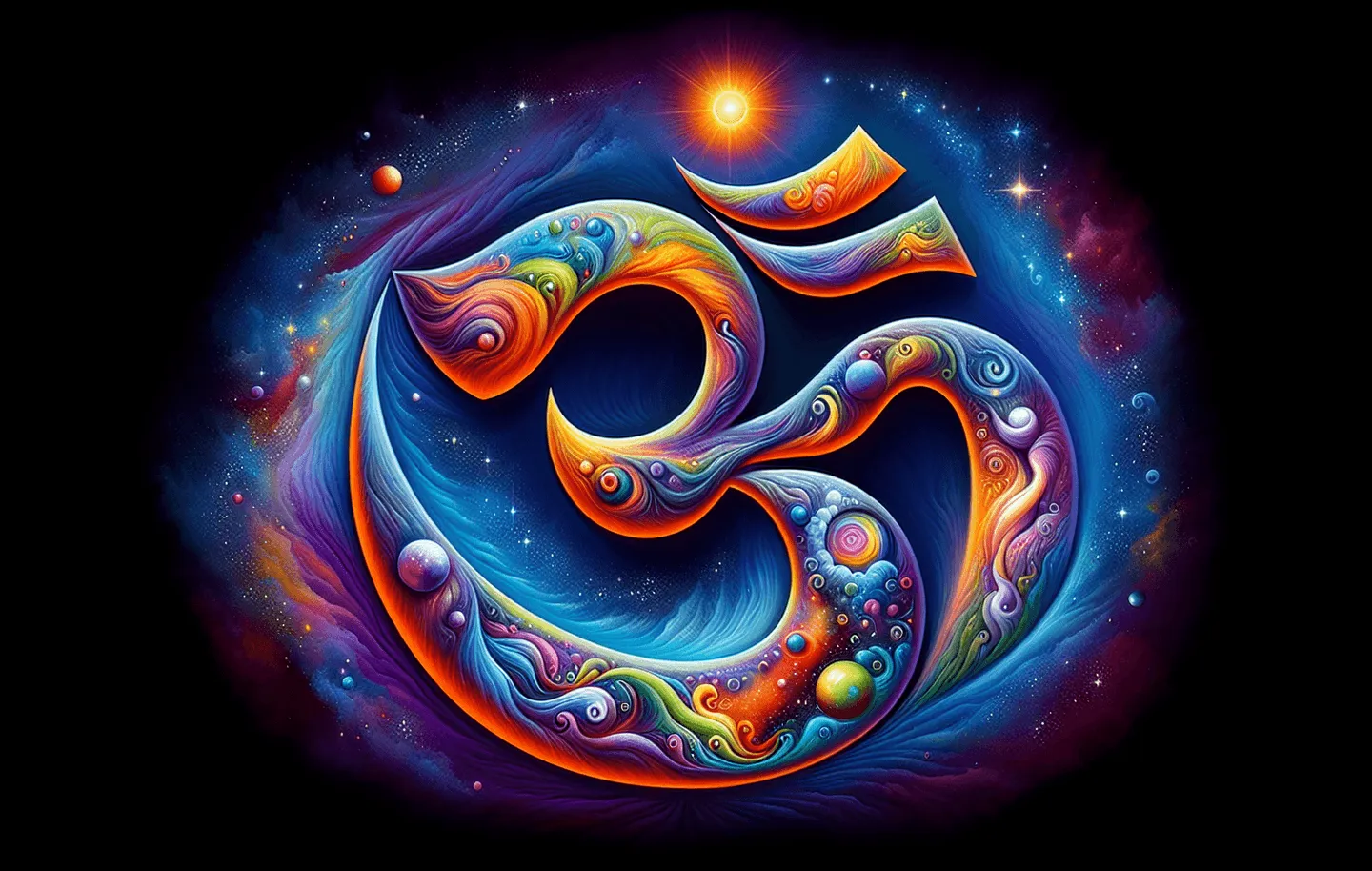
Comprising three components – A, U, and M, the Om symbol encapsulates the universe’s vibrational resonance. These symbolize creation, manifestation, and destruction respectively, representing the entirety of the universe and the ultimate reality within the Hindu tradition. Each component of the Om symbol holds a unique significance, embodying the vibrational resonance of the force driving all creation.
The curves of the Om symbol act as a mirror to the mind, reflecting the various states of consciousness and symbolizing the journey of life and self-discovery. When incorporated into meditative practices, the Om symbol becomes a guide, leading individuals along the path of spiritual growth and inner connection.
Chanting Om: Benefits and Techniques
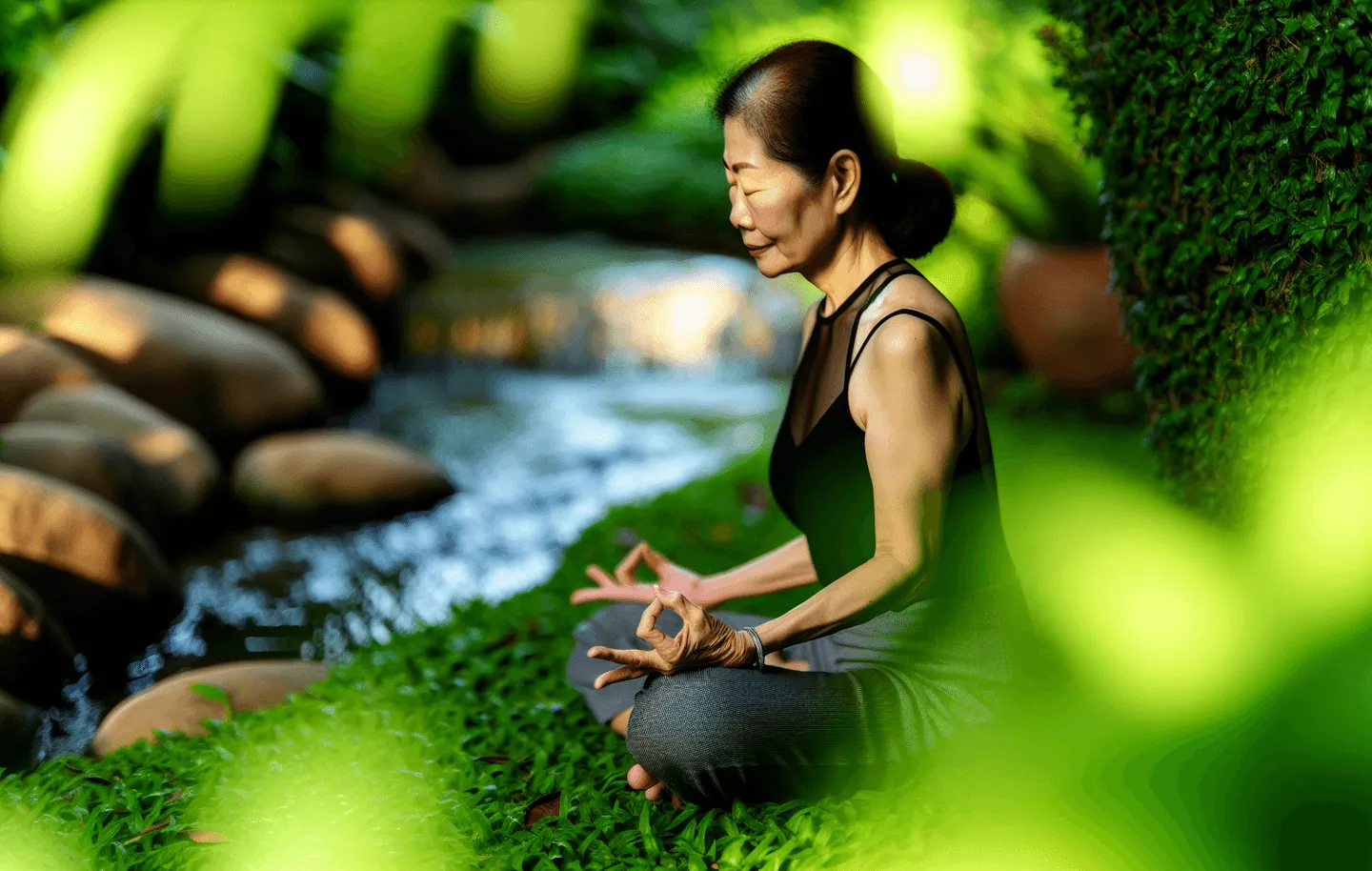
Chanting Om extends beyond mere spiritual practice; it is a voyage towards peace, harmony, and spiritual development. To embark on this journey, follow these steps as part of your meditative practice:
- Find a tranquil environment.
- Assume a comfortable seated position with an upright posture.
- Take a few deep, deliberate breaths through your nose to prepare yourself for the spiritual voyage that lies ahead.
Chanting Om has tangible benefits on a physical and psychological level.
Research indicates that chanting Om can potentially:
- Boost parasympathetic nervous system activity
- Foster relaxation
- Induce calmness
- Suggest limbic deactivation
Chanting Om doesn’t just resonate with spiritual wisdom, it has tangible benefits on a physical and psychological level.
The Om syllable, when chanted, aligns the mind, body, and spirit, releasing suppressed emotions and traumas, connecting to the soul, and reducing levels of stress and anxiety.
Physical and Mental Health Benefits
As a harmonizing practice, chanting Om intertwines the threads of mind, body, and spirit.
It has several benefits, including:
- Calming the mind and decreasing mental chatter
- Transitioning the brain into a relaxed state, releasing stress and fostering a deeper sense of relaxation
- Enhancing blood circulation and energy levels
- Promoting heart health and regulating blood pressure
Chanting Om is a powerful practice that can bring balance and well-being to your life.
The vibrational sound of Om chanting has several benefits, including:
- Soothing the ears and nourishing the mind
- Cultivating the ability to remain in the present moment, enhancing concentration and mindfulness
- Potential benefits for the immune system and self-healing
- Inducing relaxation, alleviating negative emotions, and boosting energy levels
Scientific evidence further substantiates these benefits.
Balancing Energy Centers
The act of chanting Om can be likened to tuning a musical instrument. As you chant, the sound vibrations echo throughout your body, stimulating and harmonizing your chakras – the primary energy centers as per Eastern philosophy. This harmonization leads to emotional equilibrium and spiritual enlightenment, bringing balance to your life.
The soothing rhythm of Om chanting not only calms the mind but also tunes the body’s energy centers. The evidence of this lies in the augmented parasympathetic nervous system activity, relaxation, and tranquility that occurs when you chant Om, signifying equilibrium in energy centers.
Integrating Om into Yoga and Meditation Practices

Om serves as a celestial bridge, connecting yoga and meditation to the cosmic sound of the universe. It symbolizes divine energy and signifies the integration of mind, body, and spirit.
Integrating Om into your yoga and meditation practice can lead to:
- a richer spiritual experience
- a deeper connection with your inner self
- increased focus and concentration
- a sense of peace and tranquility
- enhanced spiritual development
During meditation, Om serves to:
- Fortify the heart and lungs
- Synchronize breathing with its resonance
- Symbolize the integration of the mind
- Foster tranquility
- Enhance attentiveness
- Bolster emotional welfare
The power of Om chanting amplifies concentration by necessitating mindfulness of its resonance and oscillations, acting as a central focus and fostering serenity and composure.
Om and Yoga
Om plays a significant role in yoga practice. Chanting Om at the beginning and end of a yoga session signifies:
- the start and end of the physical practice
- connects us to our higher self and the universe
- deepens meditation
- clears away spiritual obstacles
- reaffirms the practice.
Om’s vibrational sound resonates with the unity of mind and body, fostering a sense of harmony and facilitating self-reflection and introspection. This impact of Om chanting in yoga extends beyond the mat, influencing our thoughts, actions, and interactions, thus enriching our lives.
Om and Meditation
The sound Om, also known as “sound om,” serves as a seed mantra in meditation, providing a focal point for the mind and helping to deepen the meditative experience. By vocalizing it as ‘AUM’ and enunciating each letter as “AaaaaUuuuuMmmm,” the Om mantra induces relaxation, facilitates calmness, and directs attention towards one’s inner self.
Chanting Om necessitates concentrated attention on the sound and vibrations of the mantra. This training of the mind to concentrate and remain present in meditation, coupled with the potent vibration of Om that permeates one’s being, induces a sense of:
- tranquility
- peace
- calmness
- relaxation
- inner stillness and broadens the consciousness.
Respecting Cultural Origins: Using Om Mindfully
Representing a sacred sound, syllable, mantra, and invocation in Hinduism, the Om symbol bears cultural significance. Its historical roots in ancient Buddhist cultures underscore its importance in both religions. However, its utilization in a manner that aligns with Western preferences, such as for aesthetic reasons or obtaining tattoos without comprehending their significance, can be deemed disrespectful to its cultural origins.
To use Om mindfully, one must understand its cultural and religious significance, ensuring it remains connected with its religious or socio-cultural context.
Incorporating Om into spiritual practices with mindfulness involves:
- Locating a comfortable seating position
- Closing the eyes
- Engaging in deep breathing exercises
- Vocalizing Om during exhalation
- Being aware of its cultural importance
Learning About Om
Om (or Aum) is a revered symbol, sound, and mantra with significant historical importance in various religious traditions. While it is central to Hinduism, it also holds relevance in Jainism and extends its influence to different spiritual traditions beyond its Hindu roots.
Om’s philosophical significance in Hinduism, Buddhism, and Jainism makes it a deeply respected spiritual symbol and sacred sound. It represents the core of the ultimate reality and plays a crucial role in religious rituals and philosophical beliefs within these religious traditions.
Finding a Knowledgeable Teacher
A knowledgeable spiritual teacher or a certified yoga teacher plays a vital role in learning the use of Om in spiritual practice. They provide guidance, wisdom, and support based on their personal experience and understanding of the practice. An experienced instructor can facilitate the incorporation of Om into yoga and meditation routines by providing guidance on using Om with reverence and as a tool for meditation.
A well-informed instructor can assist in addressing cultural sensitivity issues during training in the use of Om by:
- Being mindful of cultural appropriation
- Avoiding teaching appropriative aspects of the practice
- Paying attention to the diversity of students attending their classes to ensure inclusivity.
Locating a well-informed instructor for gaining knowledge about the use of Om in yoga and meditation practices involves seeking individuals who have dedicated time to studying yoga and have reached a level where they can lead others in the practice.
Om in Art, Music, and Popular Culture
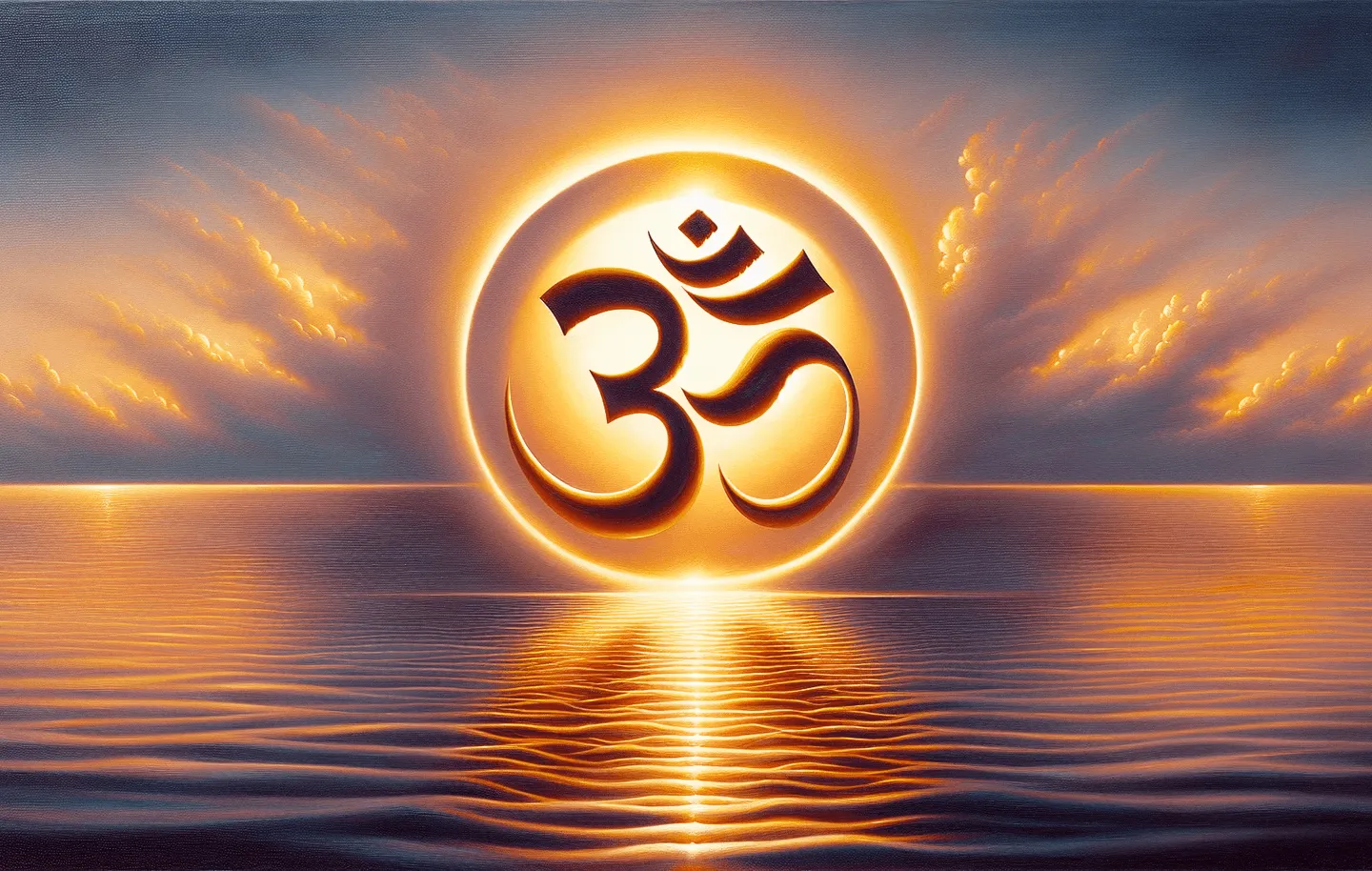
Incorporated into contemporary art, the Om symbol is represented through various mediums, including paintings, prints, and digital art. Artists have been motivated to produce distinct and personalized interpretations, often characterized by intricate details and vibrant colors, with the intention of eliciting a feeling of tranquility and enlightenment.
In popular music, the Om symbol is employed as a representation of a sacred sound and mantra. It is invoked in Hindu devotional songs or used as a special cadence, symbolizing its deep spiritual roots and resonance within the genre. The Om symbol holds significance in popular culture as it represents peace, spirituality, and a connection to one’s roots. It serves as a universal icon that resonates with broad audiences.
Summary
From its historical and spiritual origins to its significant role in yoga and meditation practices, the Om symbol serves as a celestial bridge connecting us to the universe. Its vibrational resonance harmonizes our mind, body, and spirit, facilitating tranquility, concentration, and a sense of interconnectedness. As we respect its cultural roots and use it mindfully, we can tap into the profound spiritual wisdom that the Om symbol embodies, enriching our lives and spiritual journey.
Frequently Asked Questions
What does OM stand for in Yoga and spirituality?
Om, not an acronym, packs a powerful punch in yoga and spirituality. It’s the primordial sound, symbolizing the universe in Hinduism and Buddhism, representing the union of mind, body, and spirit in yoga, and finding resonance in various spiritual paths. Chanting it quiets the mind, while the symbol itself inspires introspection. Om’s meaning varies across traditions, so approach it with respect and appreciation for its depth.
What is the real meaning of Om?
The word “Om” is defined by Hindu scripture as the primordial sound of creation, serving as a sonic representation of the divine and encompassing all other sounds within it. It is considered the original vibration of the universe.
What is the significance of Om in Hindu rituals?
Om holds significant spiritual symbol in Hinduism, often used at the beginning and end of prayers, chants, and meditation, symbolizing the essence of the entire universe.
What are the benefits of chanting Om?
Chanting Om can potentially boost relaxation, induce calmness, and contribute to spiritual wisdom by aligning the mind, body, and spirit. These benefits can foster inward focus and connection to the soul.
How can the use of Om be considered disrespectful to its cultural origins?
Using Om for Western fashion trends or getting tattoos without understanding its cultural significance can be seen as disrespectful to its origins. Be mindful of how you incorporate cultural symbols.

Kelly is a passionate writer, enthusiastic yogi and professional sunrise chaser. Kelly has traveled and worked extensively around the world in health resorts, detox centers, and wellness retreats.